
F1 Hybrid Seedlings
We didn’t announce it. We changed the seed and waited to see whether anyone noticed.
They did. Retailers started ringing to ask what we’d done differently — their Plantex seedlings were holding on the bench longer, and they weren’t losing them to disease the way they had been.
Only then did we start putting F1 on the label.
The change was simple. Commercial growers — the ones supplying supermarkets — plant F1 hybrids, because their livelihood depends on a crop that emerges evenly, resists disease and actually produces. They can’t afford a variety that sulks in a wet spring.
We asked an obvious question: why shouldn’t a home gardener have the same thing? So we started growing those varieties for retail nurseries. Not the leftovers of the commercial trade — the same seed, grown properly, in a punnet sized for a backyard.
Our customers noticed before we told them. That’s still the part we’re proudest of.
What F1 hybrid actually means
An F1 hybrid is the first generation of a deliberate cross between two carefully maintained parent lines. Breeders select for the traits that matter — yield, disease resistance, uniformity, flavour, how well a plant copes with stress — and the first generation expresses those traits strongly and consistently.
It isn’t genetic modification. It’s controlled pollination, a technique used in plant breeding for well over a century.
| What you get | Why it matters |
|---|---|
| Consistency | Every seedling in the punnet behaves the same way — they emerge together and crop together. |
| Disease resistance | Bred-in resistance is the difference between a crop and a compost heap in a humid Melbourne February. |
| Yield | Bred to produce, because a commercial grower is paid by the kilo. |
| Vigour | Hybrid vigour is real and measurable. Plants establish faster and handle stress better. |
The honest trade-off
We’d rather tell you the catch than have you find it later.
You can’t save the seed. F1 seed doesn’t come true — plant it next year and you’ll get an unpredictable mix from the grandparent lines. If seed-saving is part of why someone gardens, an heirloom is the better choice.
They cost more to breed, and that flows through the chain.
Heirlooms have their own case. Flavour diversity, history, the varieties that only exist because someone kept them going. We’re not here to argue against them.
Our position is simply that a gardener who wants a reliable crop should have the option the professionals use — and for a long time, in retail nurseries, they didn’t.
What this means on your bench
The gardener benefit is obvious. The retailer benefit is the one nobody talks about, and it’s the reason our customers noticed before we said anything.
Better shelf life. A seedling with hybrid vigour holds its condition longer in a punnet. It doesn’t stretch, yellow or collapse while it waits for a buyer. Fewer trays going in the bin at the end of the week.
Less disease on the bench. Crowded seedlings in a warm shop are ideal conditions for disease to move through a batch. Bred-in resistance means it doesn’t take the tray with it.
Fewer complaints, more repeat customers. A customer who succeeds comes back. A customer whose tomatoes never fruited buys herbs next year, then stops altogether.
Something your staff can say. Explaining why these seedlings perform is advice a chain store can’t give across the counter.
That last one matters to us. We supply independently owned businesses, and anything that helps them compete is worth doing.
What we grow
We select F1 lines across the range and grow them under our own labels:
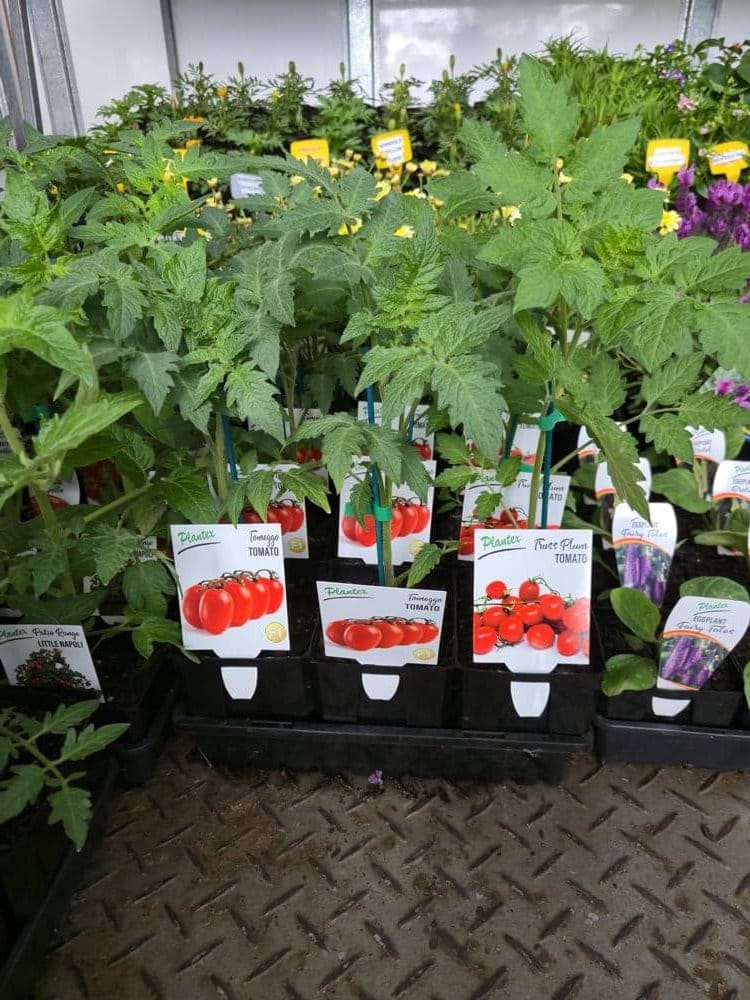
- Plantex-branded tomatoes — Roma, Apollo, Sweetbite, Tomeggo and Truss Plum
- The Tomato Patio Range — Little Sicily, Little Napoli and Little Bing, bred compact for pots and balconies
- F1 brassicas — broccoli and cauliflower
- Chilli and capsicum, cucumber, and the seasonal vegetable range
Everything we grow is supplied as seedlings — some more advanced than others depending on the line and the pot size, but all of it raised here and ready to plant.
Which specific cultivars sit behind each is our own business. Working out what performs in a Melbourne backyard took years of trialling, and we’d rather keep that to ourselves. What matters to you is on the label: a variety chosen to crop, hold on the bench, and bring the customer back next season.
Tomatoes are the clearest example of the approach — see tomato season for what we grow and when it is ready.
The part that tells us it worked
Our customers tell us that gardeners come back the following year holding a Plantex label, asking for that one again.
That’s the whole thing, really. Someone grew a good crop, kept the label, and walked back into the same nursery twelve months later knowing what they wanted. The nursery made a sale they didn’t have to work for, and the gardener got the same result twice.
You can’t manufacture that. You can only grow something good enough to be remembered, and put your name on it.
It isn’t only tomatoes
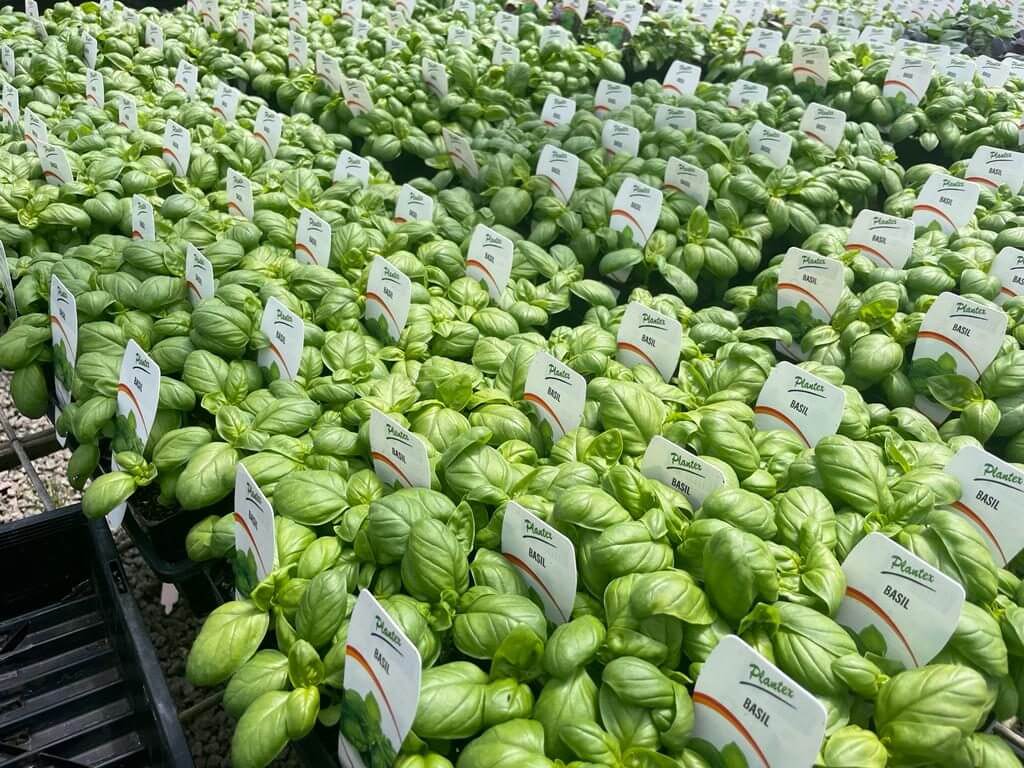
Basil is one of our biggest sellers, and it is grown from F1 seed for a specific reason.
Basil’s problem in retail is downy mildew. A batch looks perfect leaving the nursery, then collapses on the bench a week later — and the customer who bought it does not buy basil again that season.
The variety we selected is bred for resistance to it, along with fusarium wilt, and it is bred for pot production rather than field cutting, so it holds its shape in a punnet. Dark green, uniform, compact, and it still smells and tastes like the Genovese basil people expect.
That is the whole approach in one crop: find what the public already wants, then grow the genetically better version of it.
F1 is not GMO
The two get confused constantly, and retail staff get asked at the counter.
An F1 hybrid is the first-generation cross of two carefully selected parent plants — the same thing that happens when a bee moves pollen between two flowers, done deliberately and under controlled conditions. Plant breeders have worked this way for well over a century. Nothing is inserted, edited or engineered.
What you get from it is vigour and consistency. Every plant in the tray behaves the same way, because every plant has the same two parents. That is why the seed costs more, and it is why we use it.
Our seed comes from Australian suppliers who publish non-GMO documentation, and we are happy to point your staff to it if a customer asks.
Trade customers only. Plantex is a wholesale production nursery — an ABN and a trade account are required. If you’re a home gardener, our seedlings are available through independent garden centres across Victoria.
Stock varieties that perform.
Call 03 5998 5552 or email sales@plantexnursery.com.au to ask about the weekly availability list.
You can order off the weekly list for wholesale plant delivery, pick it up from our trade market stands, or talk to us about contract growing if you need volume on a set date.